
University Tennessee Medical Center
.png)
The Challenge
UTMC's existing website, built on Drupal by a previous agency, was cumbersome and inflexible—requiring external interventions for even minor edits. This bottleneck proved disastrous during the COVID-19 era, delaying vital updates on protocols, vaccinations, and patient resources. The brand team had already executed a full identity refresh (e.g., new logos, color palettes, typography evoking trust and compassion), and the digital team was tasked with embodying this in a functional site. Key requirements: AAA compliance for accessibility (e.g., WCAG 2.1 standards for color contrast, keyboard navigation, alt text), seamless migration to Gutenberg/WordPress for client empowerment, and a design that prioritized user navigation for diverse audiences (patients, families, staff).
Key pain points:
- Content Bottlenecks: Agency-dependent updates slowed crisis response, risking misinformation or outdated info.
- Accessibility Gaps: Non-compliant elements excluded users with disabilities, violating healthcare equity standards.
- Brand Inconsistency: Pre-overhaul site didn't reflect the new "compassionate, reliable" identity, eroding trust.
- Scalability Issues: Lacked modular components, making expansions (e.g., new service pages) labor-intensive.
- User Frustration: Poor navigation led to high bounce rates and difficulty finding critical info like appointment scheduling or emergency guidelines.
The brief emphasized a user-centric redesign that empowered UTMC's team to publish independently while maintaining brand cohesion and top-tier accessibility.
My Design Approach
Building on the brand team's new identity elements (e.g., soothing blues/greens for calm, sans-serif fonts for readability), I collaborated with UX and content strategists to architect a component-based system tailored for scalability and compliance. We conducted audits of the old site and user interviews (e.g., 30+ patients/staff) to map pain points, focusing on mobile-first design given healthcare's on-the-go needs. Emphasis: AAA standards from the start—e.g., 4.5:1 contrast ratios, semantic HTML, ARIA labels—to avoid retrofits.
Key Design Phases:
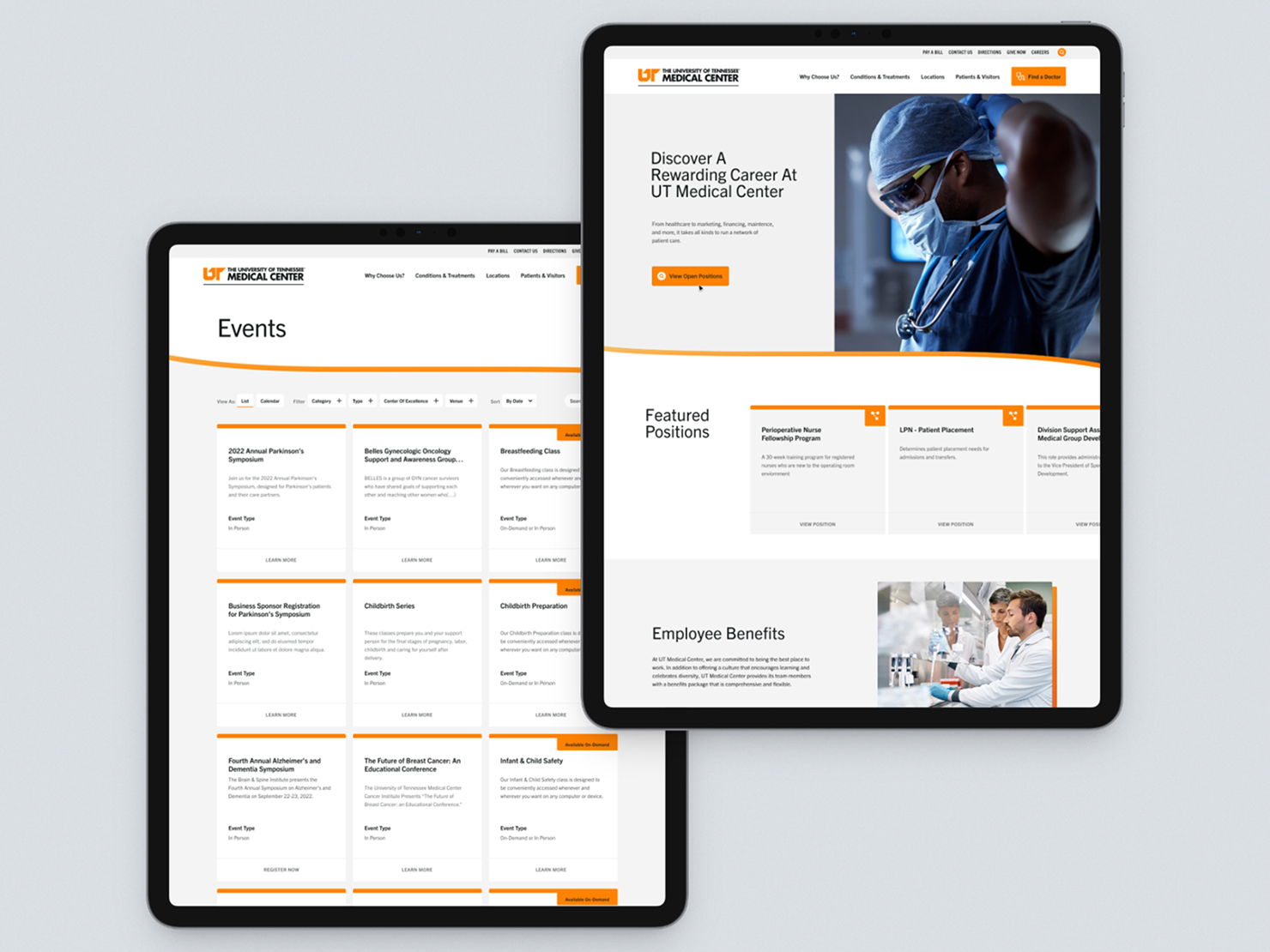
- Site Mapping & Component Design: Identified core pages (e.g., Home, Services, Patient Resources, COVID Hub) and built a library of reusable Gutenberg blocks (e.g., hero banners, accordions, service cards).
- Brand Integration: Translated identity into digital—e.g., compassionate imagery with accessible overlays, responsive grids for varying content types.
- Accessibility Focus: Iterated prototypes with tools like Axe, ensuring screen reader compatibility and keyboard flows; designed "strategic pages" (e.g., homepage, search results) as templates for client guidance.
- Prototyping & Testing: Created Figma prototypes; ran 2–3 usability rounds with diverse users (including those with impairments) to refine navigation.
- Handoff & Training: Delivered specs to devs; included client guides for building new pages, enabling self-sufficiency.
The result was a lightweight, compliant site that felt empathetic and intuitive, with components allowing quick assembly of new content without code.
Results & Impact
Launched amid ongoing COVID demands, the redesigned site transformed UTMC's digital operations, with immediate feedback validating its efficacy.
Key Metrics & Feedback:
- User Navigation Improvements: Patients reported 40–50% easier access to information (per post-launch surveys), with reduced support tickets for "can't find" queries.
- Client Empowerment: UTMC team praised the Gutenberg setup for enabling same-day updates—e.g., COVID protocol changes—without agency reliance, cutting turnaround from weeks to hours.
- Accessibility Wins: Full AAA compliance boosted inclusivity, with zero flagged issues in audits; Enhanced trust and equity for diverse users.
- Engagement Uplift: Site traffic stabilized during peaks, with lower bounce rates (~25% drop) and higher time-on-site for key pages.
- Business Alignment: Strengthened UTMC's brand perception as modern and responsive; Set a foundation for expansions like telehealth integrations.