brand system - 2023
Helinox —
A gear brand built around the moments it creates, not the specs it has.
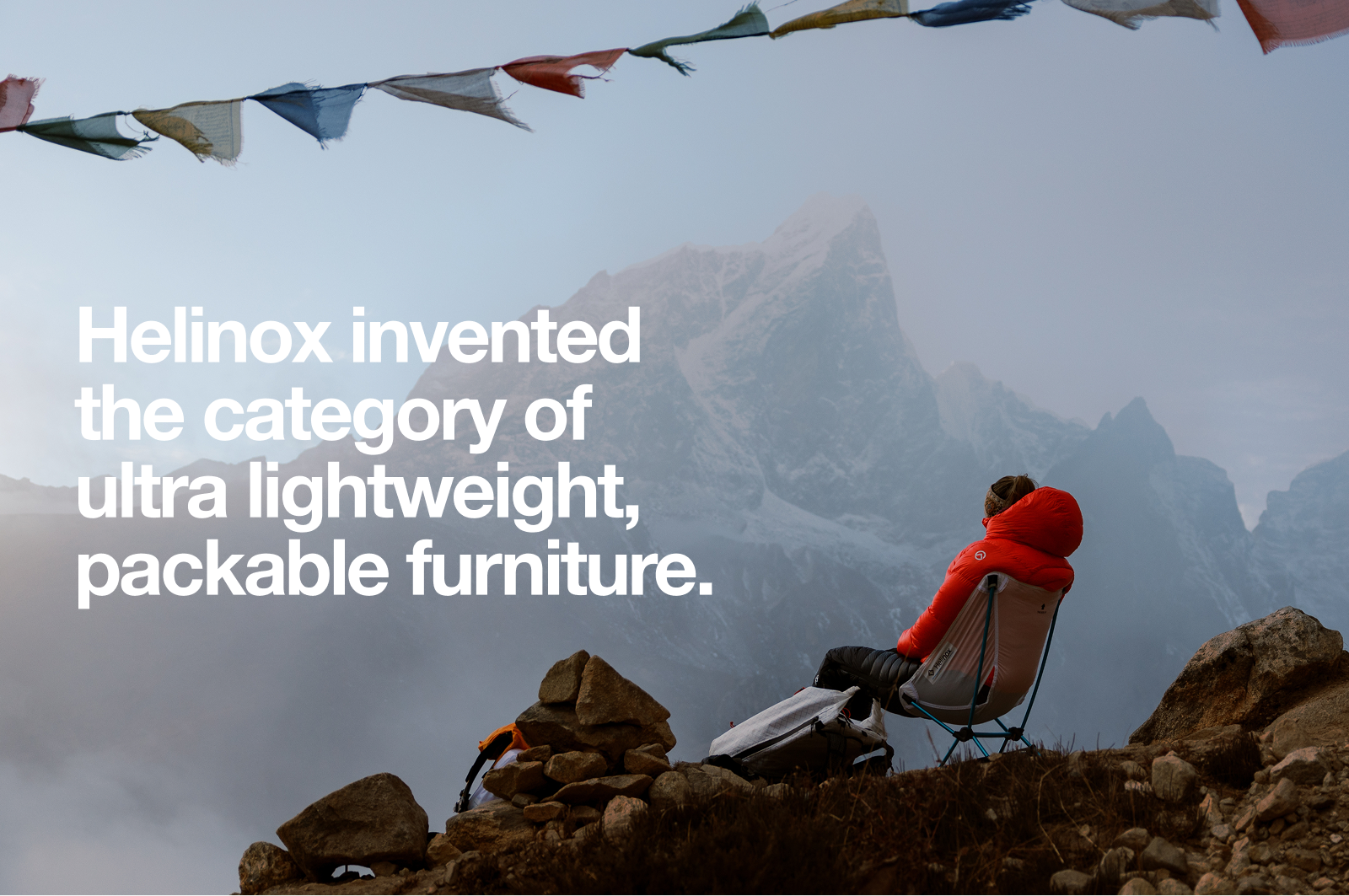
Helinox invented the category. Ultra-lightweight, packable camp furniture — they built it first, and for years that was enough. Then the copies came. REI, Nemo, One-Click, One Tigris — dozens of manufacturers producing near-identical products at lower prices. When your design gets copied wholesale, the product stops being the differentiator. The brand has to be.
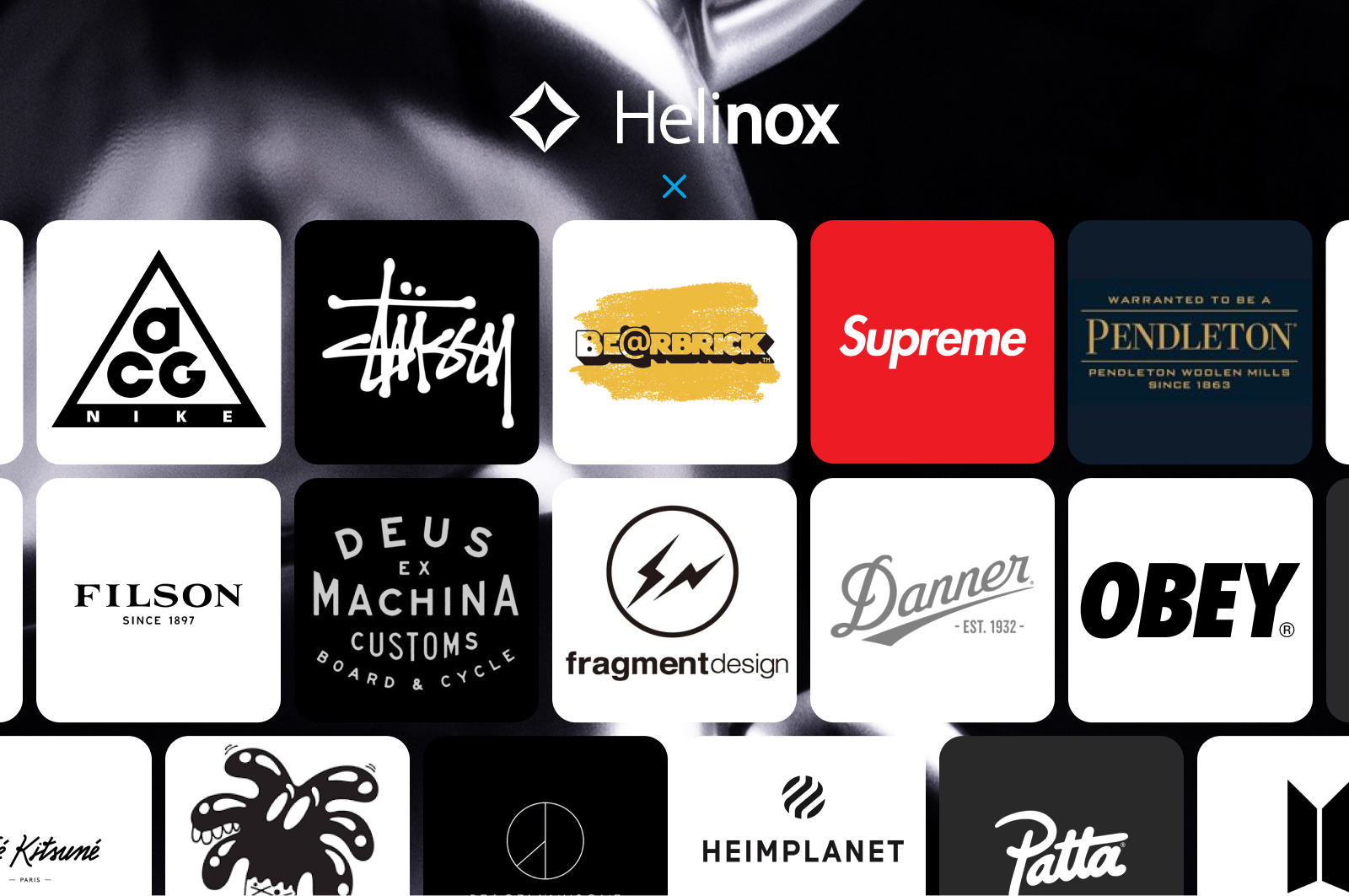
The problem was Helinox had never needed a brand. No design function, no style guide, no shared visual language — just a product people loved, a logo, and a decade of collabs with Supreme, Filson, Stüssy, ACG, Danner, and Fragment that proved the cultural equity was there. It just hadn't been shaped into anything coherent.
The harder problem was adoption. Regional markets had been operating independently for years — their own interpretations, their own visual logic, their own version of what Helinox was supposed to look like. That autonomy had a history behind it. Even the owner wasn't convinced that unification was the right move.
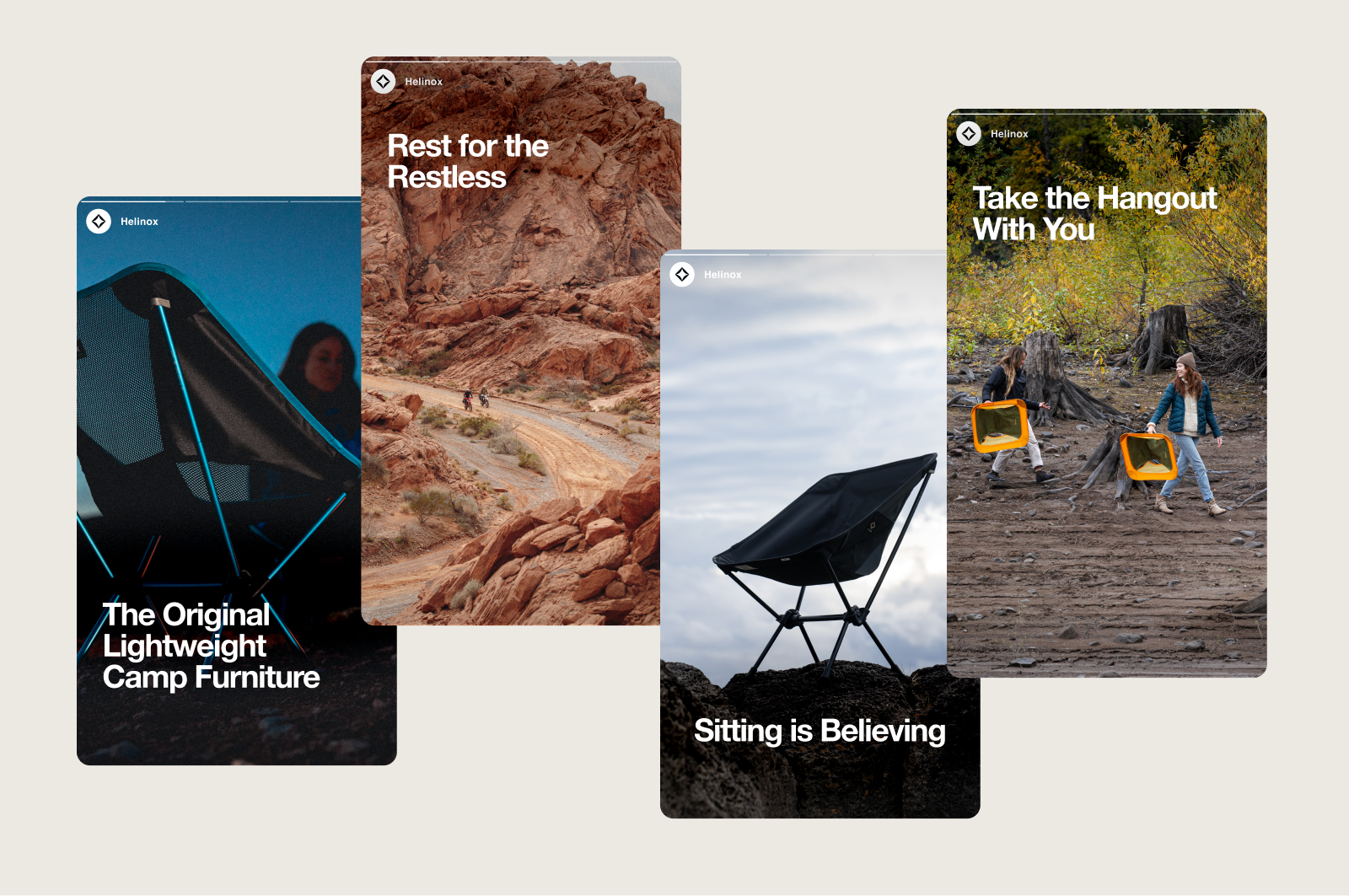
The answer wasn't a presentation. It was proof accumulated over time. Templates deployed in campaigns. The same visual language appearing in pitch decks, social, retail displays, e-commerce — surface after surface, all saying the same thing in the same voice. Once the system was visible everywhere simultaneously, the argument made itself. The owner came on board. The markets followed.
That was the proof of concept. The work itself was to build that infrastructure from scratch and use it to make an argument: Helinox isn't the original because it was first. It's the original because of who uses it, where they take it, and what it makes possible. Style guide, site redesign, multichannel campaign direction — all of it pointed at the same shift. Away from specs. Toward the moments the gear creates.


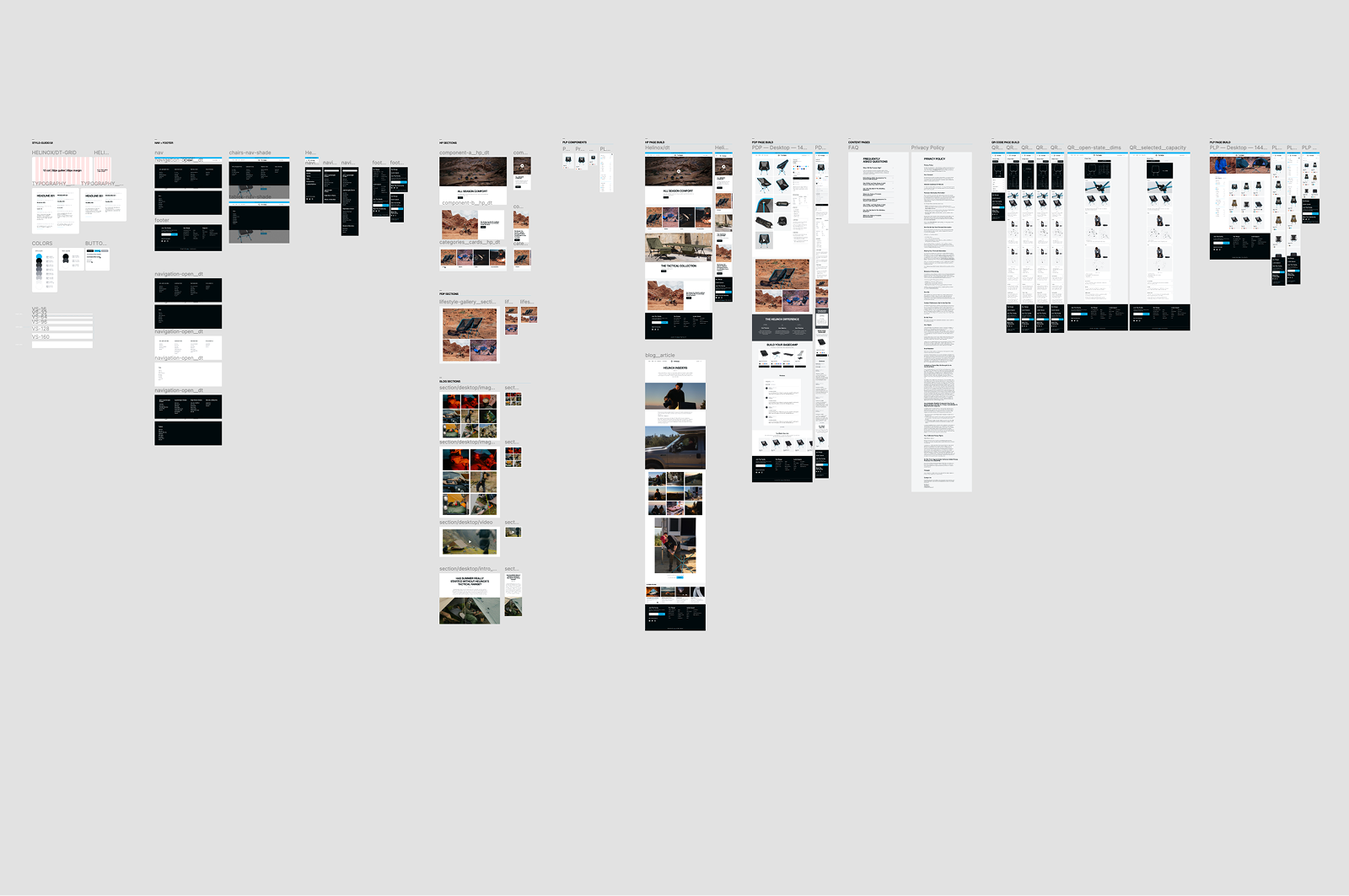




Everything was designed in Figma first. The style guide, the site, the campaign templates — built as a living system, not a one-time deliverable. Working directly with the CMO, the brief evolved as the work did. That kind of trust is rare and it shows in the output.
Before the system existed, Helinox's global partners were largely doing their own thing. Regional distributors, international markets — everyone had their own interpretation of the brand because there was nothing authoritative to follow. The inconsistency wasn't malicious, it was just the natural result of a vacuum.
The campaigns were what changed that. Once there was something with a clear visual voice and a point of view — something that felt intentional and complete — the tone set itself. Partners matched it. The system didn't need to be enforced because it was worth following.